
OLDER ADULT · TRAIN
A Meta Quest Pro experience measures fixation stability and guides daily PRL exercises through eye tracking.
 HUANG
HUANG
OVERVIEW
An at-home asymmetric VR system that connects older adults with age-related macular degeneration, family members, and clinicians through vision training and reciprocal postcard exchange.
READ THE DRS PAPER ↗THE QUESTION
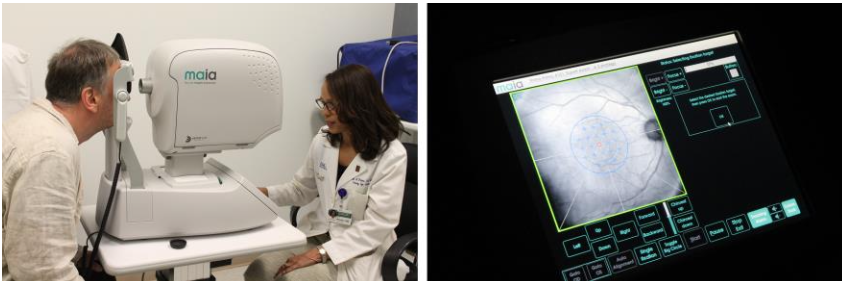
Age-related macular degeneration causes central vision loss. Patients can learn to use a Preferred Retinal Locus, but existing training is largely tied to costly clinical equipment and repetitive exercises that are difficult to sustain at home.
Developed with an eye-care provider, Macular Mailbox reframes rehabilitation as a shared experience. Clinical monitoring, family communication, and patient creativity become distinct but interdependent parts of one care system.

HOW IT UNFOLDS
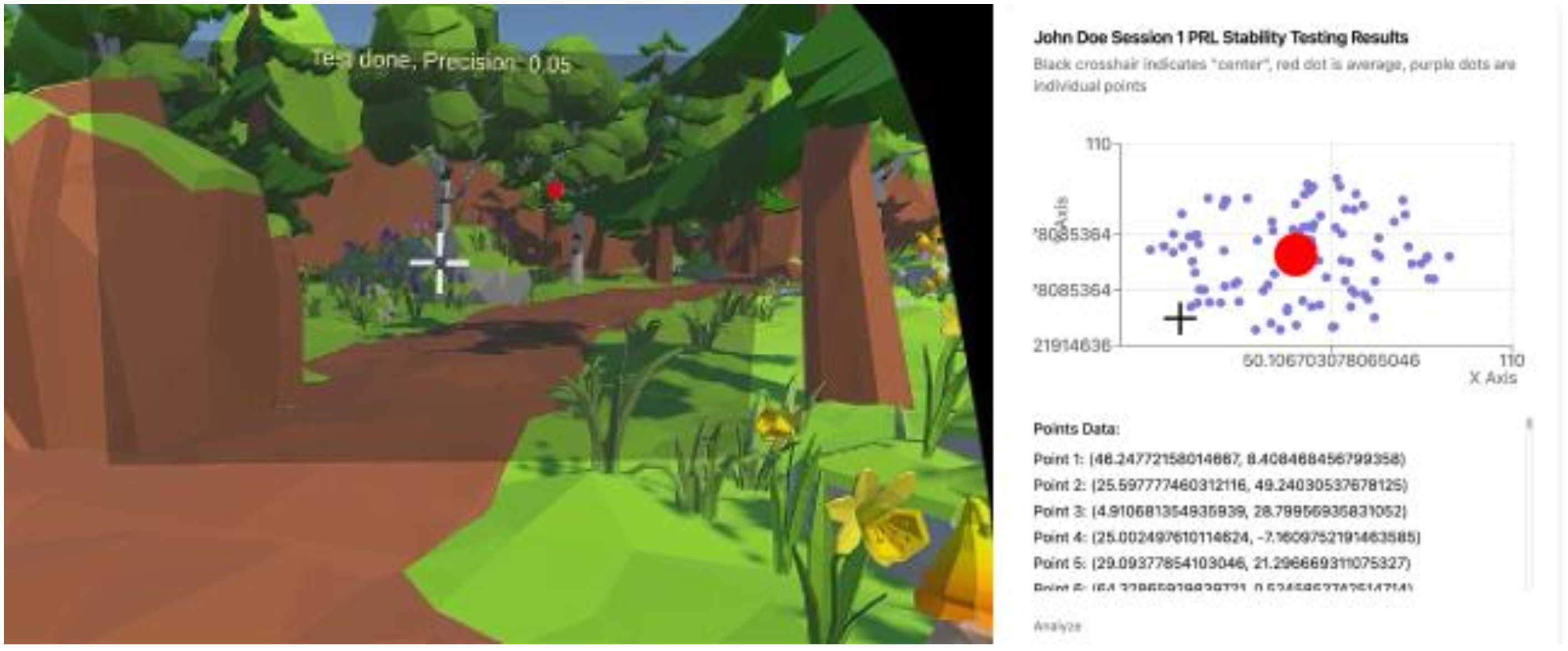
A Meta Quest Pro experience measures fixation stability and guides daily PRL exercises through eye tracking.
A mobile companion lets family members select photos, record voice messages, add collectible stamps, and send personal postcards.
Passthrough mode allows older adults to photograph their surroundings, dictate a message, and send postcards of their own.
A web dashboard receives fixation data so clinicians can review progress, interpret results, and adjust training parameters remotely.
DESIGN THROUGH ITERATION
Field visits to Emory Eye Center and expert conversations grounded the project in existing PRL training practices and clinical constraints.
The team separated clinical data from private family communication while giving every participant a meaningful and interdependent role.
The Unity prototype combined fixation tests, gaze-based training, passthrough capture, data logging, and a custom REST connection to the clinician dashboard.
Familiar postcards and creative expression transformed the patient from a passive recipient of treatment into an active participant in family communication.
WHAT THE PROJECT TAUGHT US
“The goal was not simply to move a clinical exercise into the home, but to connect functional training with creativity, family presence, and patient agency.”
The prototype demonstrates eye-tracked PRL training, remote data transfer, passthrough creation, and a connected multi-interface workflow.
The project applies asymmetric play to connected care, balancing clinical oversight, personal privacy, and social encouragement.
Future work will involve co-design with older adults, families, and clinicians before any claims of clinical efficacy can be made.